Are termites and white ants the same thing?
Sources: Standards Australia; Australian Museum.
Yes. "White ants" and "termites" are two names for one insect. The Australian Museum says termites are sometimes called 'white ants', and CSIRO says they are often known as 'white ants'. Neither word is wrong when you're describing a pest.
The more useful point for a homeowner is how few of them are the problem. Australia has about 350 termite species, about 30 of which have achieved pest status. That is under one in ten (our estimate: 30 ÷ 350 is about 8.6%). The Australian Museum's own count lands in the same place: 258 described species plus 90 undescribed, which adds up to 348. Many termites eat grass and never touch a house.
So the name tells you nothing about the risk. What matters is which termite it is, and only a professional can tell you that.
Why are termites called white ants if they aren't ants?
- 1Shared traits (CSIRO): structural similarities, gut microbes that digest cellulose, and giant northern termite queens laying eggs in pods like cockroaches
- 2Lookalike: colonies with castes (queen, king, workers, soldiers) and winged reproductives
Sources: CSIRO; Australian Museum; Business Queensland; Australian Museum, ants and termites.
Termites are not ants, and they are not even related to real ants.
Ants belong with wasps and bees. Termites sit in a completely different insect group, Order Isoptera. Their nearest relatives are cockroaches. CSIRO calls a termite a kind of stunted, pale and very social cockroach, pointing to shared body structures and gut microbes that digest cellulose. The giant northern termite's queens even lay eggs in pods, the way cockroaches do. Business Queensland puts it plainly: termites have a superficial resemblance to ants but are in fact more closely related to cockroaches.
The nickname is easy to understand because the two live in similar ways. Both live in colonies with castes (queen, king, workers and soldiers), and both have winged reproductives. Add a pale body and a habit of moving in numbers, and "white ant" is an easy name to reach for.
How can you tell an ant from a termite?
- 1Antennae: elbowed (ant) vs a string of bead-like segments (termite)
- 2Waist: one (ant) vs none (termite)
- 3Abdomen: pointed (ant) vs blunt (termite)
- 4Wings: fore and hind unequal and strongly veined (ant) vs equal with no obvious veins (termite)
Source: Australian Museum, ants and termites.
The Australian Museum gives these body checks:
- Antennae: an ant's are elbowed. A termite's are a simple string of bead-like segments.
- Waist: an ant has one. A termite has none.
- Abdomen: an ant's is pointed at the end. A termite's is blunt.
- Wings: a winged ant's front and back wings are unequal and strongly veined. A winged termite's are equal, with no obvious veins.
| Feature | Ant | Termite |
|---|---|---|
| Antennae | Elbowed | A string of bead-like segments |
| Waist | One | None |
| Abdomen | Pointed | Blunt |
| Wings | Fore and hind unequal and strongly veined | Equal with no obvious veins |
| Life cycle | Complete metamorphosis: egg, larva, pupa, adult | Incomplete: egg, nymph, adult, no pupa |
| Diet | Scavengers; some nest in damp or decaying wood but don't eat it | Plant-tissue specialists, some species damage buildings and trees |
Source: Australian Museum, ants and termites.
Underneath, they are built differently too. Ants grow through complete metamorphosis (egg, larva, pupa, adult). Termites skip the pupa: egg, nymph, adult.
These checks help you describe what you saw. They won't confirm or rule out termites in your house, and the insects are small: subterranean termites are 3 to 7 mm long. Our guides for Newcastle homeowners cover what to do once you've spotted them.
Does it matter whether a quote says white ants or termites?
No. On a quote or an inspection report, "white ants" and "termites" mean the same insect. Business Queensland notes that "white ants" is the common name for subterranean termites, which with drywood termites are the two kinds that damage houses.
What matters more is what the report says about where termites were found, and which standard it follows. Minimum standards for termite management sit in AS 3660, pest technicians are licensed in each state, and the industry's codes of practice are not compulsory. Our guide to what a termite inspection report covers walks through the detail.
Moisture worth fixing
Colonies that infest structures usually start outside and enter through the ground (Standards Australia).
Sources: Australian Museum; Standards Australia.
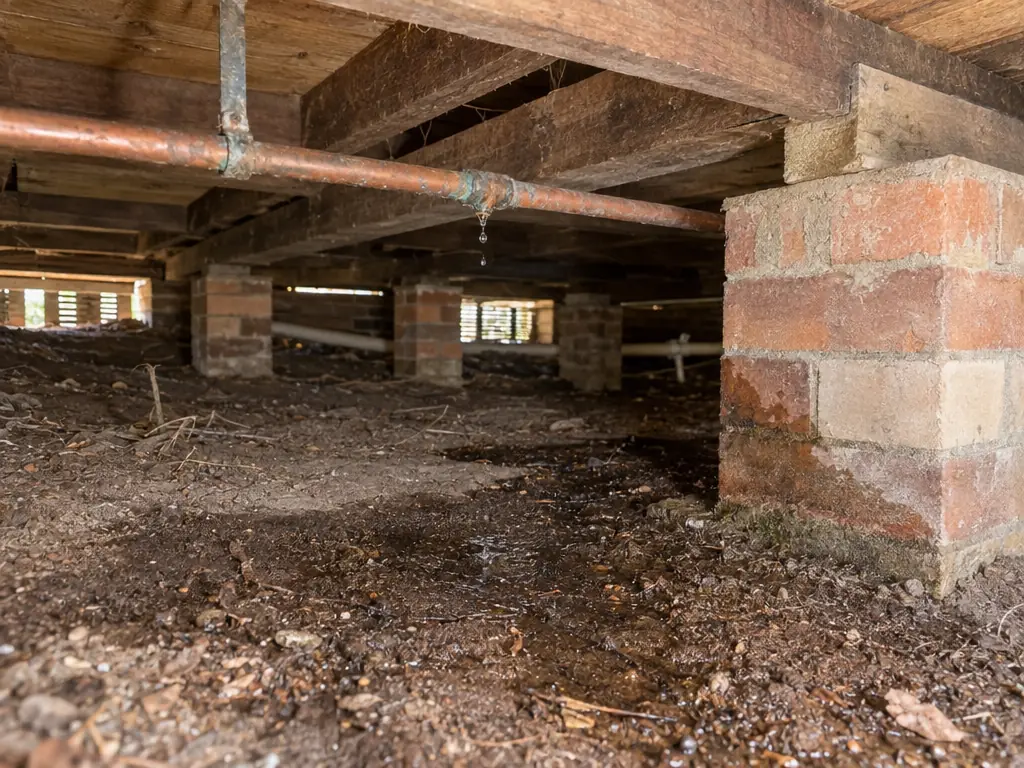
The practical side is water. Termite workers are thin-skinned and dry out easily, so they rarely leave the nest or its tunnels. Subterranean species get most of their water from soil and become building pests only where a constant water source exists. The Museum names three culprits: indoor plants on pavers, leaking pipes and leaking roofs. Colonies that infest houses usually start outside and enter through the ground, so a dripping tap against the slab or a damp subfloor deserves attention whatever you call the insect.
They eat more than framing timber, too: termites eat cellulose, including furniture, paper and fabrics.
What should you do if the insects turn out to be ants?
Sources: ABC News; Business Queensland.
Ants are scavengers. Some nest in damp or decaying wood but do not eat it. Termites are plant-tissue specialists, and some species badly damage buildings and trees. Ants living in a rotting sleeper are not eating the wood.
Pale insects inside damaged timber are another matter. Have them identified by a professional: Business Queensland says correct identification requires skill and experience. Among the best-known pest group, Coptotermes, soldiers produce a milky substance when disturbed and colonies can hold millions.
What you found, what to do
- 1
Path 1
Ants nesting in damp or decaying wood, which they don't eat; the damp is the thing to look at.
- 2
Path 2
Pale insects inside damaged timber; get a professional ID.
- 3
Path 3
Dark red-brown ants 2 to 6 mm with a darker abdomen, nest a flat patch or soil mound up to 40 cm with no obvious entry hole; Leave it, Snap it, Call it on 1800 680 244 (NSW Biosecurity Helpline).
Sources: Australian Museum, ants and termites; NSW Government, fire ants; ABC News.
One kind of ant needs a different response. Red imported fire ants are 2 to 6 mm long and dark red-brown, and their nests range from flat patches to soil mounds up to 40 cm high with no obvious entry hole. A nest was confirmed in Sydney's inner west this spring. Fire ants are prohibited matter in NSW, so treating, moving or possessing them is an offence. The official advice is Leave it, Snap it, Call it: don't touch the nest, take a clear photo, and ring the NSW Biosecurity Helpline on 1800 680 244.
What are the key facts on white ants and termites?
The key facts
- "White ants" is a common name for termitesAustralian Museum
- Termites are not related to real antsCSIRO
- About 350 species in Australia, about 30 pestsStandards Australia
- Subterranean termites 3 to 7 mmBusiness Queensland
- Colonising flights in warm, humid weather, usually spring and autumnAustralian Museum
- Subterranean termites become pests in buildings only where a constant water source existsAustralian Museum
Termite colonising flights happen in warm, humid weather, usually in spring and autumn, and the winged reproductives have two pairs of equal-sized wings. If you see a swarm this season, our Hunter spring termite routine covers what to check around the house.
Found pale insects, wings or mud tunnels?
Call them white ants or termites, the next step is the same. At Nobbys Pest & Termite our view is simple: get the insects properly identified by a professional. Take a photo, note where you found them and whether there's a leak or damp patch nearby, then book an inspection with Nobbys Pest & Termite. You can read more about termites and timber pests in Newcastle while you wait.
Sources
- https://australian.museum/learn/animals/insects/termites
- https://australian.museum/learn/animals/insects/what-are-the-differences-between-ants-and-termites/
- https://www.ento.csiro.au/education/insects/isoptera.html
- https://www.csiro.au/en/news/All/Articles/2012/October/a-termites-closest-relation
- https://www.business.qld.gov.au/industries/farms-fishing-forestry/forests-wood/pests-diseases/trees-timber/subterranean-drywood-termites
- https://www.standards.org.au/news/australias-termite-management-standard-revised
- https://aepma.com.au/Advice/TermitesInAustralia
- https://www.abc.net.au/news/2026-10-13/nsw-fire-ants-detected-at-logistics-centre-in-sydney-enfield/107259332
- https://www.nsw.gov.au/regional-and-primary-industries/biosecurity/fire-ants-nsw
- Pictures in this guide are illustrations, not photos of our jobs.