Start with the calendar, not the worry
Source: AEPMA.
Seeing termites fly in spring is normal. The routine that keeps a Hunter home's risk low is mostly ordinary maintenance plus a short calendar.
Here is the calendar. Under AS 3660.2, regular termite inspections are not to be spaced more than 12 months apart. If your home has in-ground monitoring stations, the time between services must not exceed 3 months.
Put those two rules side by side and a home with monitoring stations works out at a minimum of four services in any 12 months, plus at least one regular inspection. That is our estimate: 12 months divided by a 3-month maximum gap gives four. A home without a system needs at least one inspection a year, and your inspector may recommend more. The rest is keeping water and access sorted.
The rest of this guide covers what to watch for, the jobs around the house that matter, and what ongoing management involves if you ever need it.
Termite swarm at your place this spring: is it normal?
- 1Colonising flights: spring
- 2Colonising flights: autumn
- 3BOM outlook issued 8 Oct 2026: daytime temperatures likely above average; most of the south-east roughly equal chances of above or below average rain, below average in parts
The outlook covers temperature and rain only. It is not a termite forecast.
Sources: Australian Museum; Bureau of Meteorology, outlook issued 8 October 2026.
Yes. Once a colony reaches a certain size it produces winged reproductives, and these usually fly on warm humid nights. After mating, each pair builds a new shelter and lays a few eggs.
Spring is not the only time, though. Termite flights usually occur during spring and autumn, so a quiet October is no reason to stop watching in April.
The weather ahead is warm. The Bureau of Meteorology's outlook issued 8 October 2026 puts November to January daytime temperatures likely above average across Australia, with a better than 80% chance of unusually high maximums in areas of eastern NSW. For rain, it gives most of the south-east "roughly equal chances of above or below average rainfall", with below average likely in parts, including most of Tasmania and parts of Victoria. That is a forecast about temperature and rain, not about termites. It simply means plenty of warm weather, and flights happen on warm, humid nights.
What to do after a termite swarm
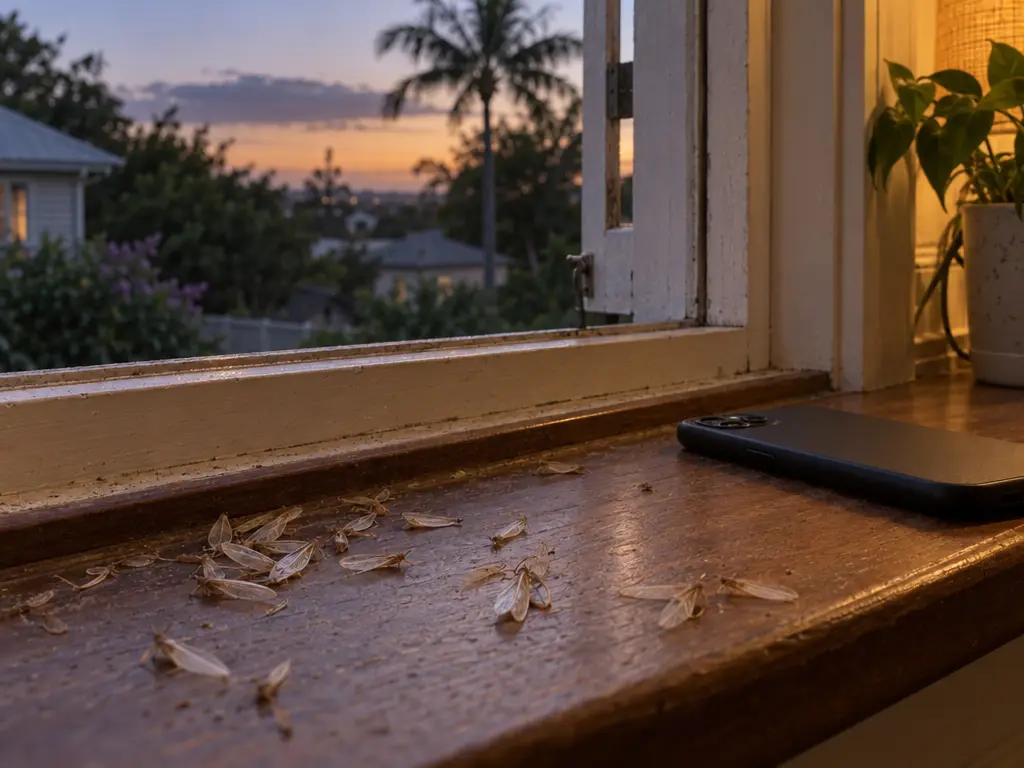
Take a breath. A swarm on its own tells you a colony is flying somewhere nearby. It is a reason to have the property checked, not a verdict on your house.
A few practical steps help:
- Take a photo of the insects or the dropped wings, and note where and when you saw them.
- Leave them be rather than spraying or digging around. Your inspector learns more from activity that hasn't been disturbed.
- Check the obvious water sources nearby: a dripping tap, a leaking downpipe, a pot plant sitting on pavers.
- Book an inspection if your last one was a while ago or you're not sure when it was.
They are often called "white ants", but CSIRO notes termites are very different insects from true ants. If what you've found turns out to be something else entirely, our guide to what wakes up in a Hunter spring covers the other household pests of the season.
Which conditions around the house keep termite risk low?
- 1Leaking downpipe
- 2Dripping tap
- 3Indoor plant pot sitting on pavers
- 4Roof leak
- 5Poor drainage pooling against the wall
- 6Within 5 m: remove dead wood, stumps and roots over 50 mm diameter
- 7Inspect trees 200 mm or more in diameter within 50 m
Sources: Standards Australia; Australian Museum; AEPMA.
Colonies that attack buildings usually begin outside and gain entry to structures via the ground. The nest might be in a stump, a tree or underground. In the case of Coptotermes, the colony may hold possibly millions of individuals.
Water is the lever you control. Subterranean termites get most of their water from the soil. The Australian Museum says they can only become pests in buildings where a constant water source is available, and it names indoor plants on pavers and leaking pipes or roofs as causes.
The Standard's list of conducive conditions reads like a spring maintenance list. It covers poor drainage or ventilation, roof and stormwater leaks, and excess moisture in the building. It also calls for removing dead wood, stumps and roots over 50 mm in diameter within 5 m of the house, and inspecting trees 200 mm or more across within 50 m.
Spring jobs around the house
Sources: Australian Museum; AEPMA. The mulch and garden bed line is our own advice.
None of these jobs is dramatic. Together they take away the steady moisture termites rely on, and they make the next inspection quicker and clearer.
Can an inspector actually reach your subfloor and roof space?
- 1400 mm between the bearers and the ground
- 2150 mm within 2 m of the access area
- 3Roof space hatch: 600 x 600 mm
Source: AEPMA.
An inspection is only as good as what the inspector can get to. AS 3660.1 sets 400 mm clearance between bearers and the ground, reduced to 150 mm within 2 m of an access area. A roof space needs a 600 x 600 mm access.
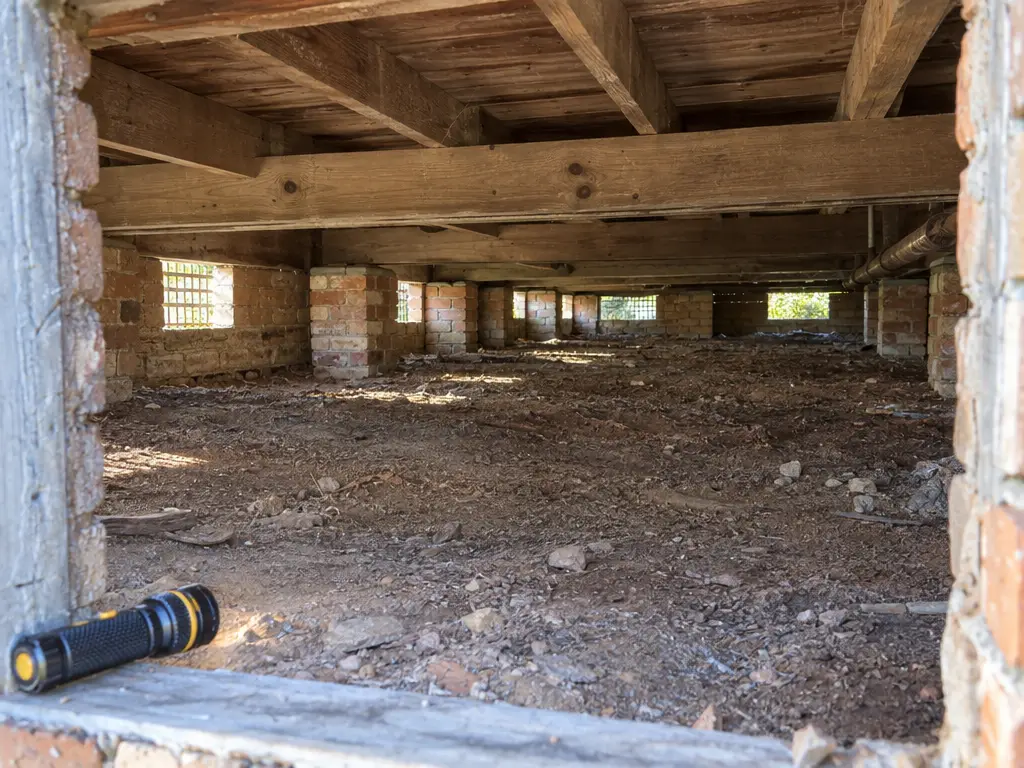
You can't easily change the height of your floor. You can keep the space under it clear of stored timber, boxes and old building offcuts, and keep the vents open so it stays dry. The same goes for the roof hatch: keep it clear and easy to open.
What does keeping on top of termites look like for an existing home?
An effective TRM system, combined with regular inspections, can significantly reduce the risk of termite damage.
NSW Government, Building Commission NSW
The NSW Government puts it plainly: an effective TRM system, combined with regular inspections, can significantly reduce the risk of termite damage. Those systems include chemical and physical barriers, termite-resistant materials, construction methods and landscaping that discourages termites.
For most existing homes, the backbone is the regular inspection. Under AS 3660.2 that means not more than 12 months apart.
If a treatment is needed, the two approaches homeowners hear about most work differently. A chemical soil barrier is a treated zone in the soil around and under the house, aimed at termites coming up from the ground. A baiting system uses stations set in the ground and checked on a schedule. Bait goes in when termites are found, and the aim is to work on the colony itself.
| What the Standard says | Chemical soil application | Baiting system |
|---|---|---|
| Where AS 3660.2 places it | after colony-control actions | may be used where activity is insufficient to expect success from dusting, foaming or liquid application |
| Ongoing visits | regular inspections not more than 12 months apart | monitoring stations: services must not exceed 3 months |
Source: AEPMA.
AEPMA's reading of the Standard puts colony-control actions first, then chemical soil application. Baiting may be used where activity is insufficient to expect success from dusting, foaming or liquid application.
Standards Australia notes that choosing a response is no longer just a matter of choosing what chemical. Owners can decide using the inspection data and the management proposals in front of them.
Industry codes of practice are not compulsory. The minimum standards are the AS 3660 series, so ask any provider which standard their work follows.
Planning a renovation or a new deck? For new building work, the NSW Government says the builder is responsible for the termite risk management system. Read the contract carefully, because some try to shift that liability to the owner.
What happens if an inspection finds termites?
- Written inspection records weather, damage potential, any existing system, non-durable timber in ground contact and photos, kept at least 3 years.
- Termite management plan, separate from the quote and issued before treatment, covering options, steps, visits and expected outcome.
- Colony-control actions.
- Chemical soil application.
- Special inspections during control actions, no more than 6 months apart
Source: AEPMA.
First comes the written record. Under the revised Standard, it should note weather, damage potential, any existing termite management system and non-durable timber in ground contact. Photos are now part of the site record, and records are kept for at least 3 years. Our guide to what a termite inspection report actually covers walks through the report itself.
Next comes a termite management plan. It is a new, separate document from a quote, issued before treatment. It sets out the options, the steps, the visits and the expected outcome, so you know what you're agreeing to before any work starts.
While control actions are under way, special inspections should be no more than 6 months apart.
Renting? Who handles termites
Tell your landlord or agent early, in writing, and keep a copy along with your condition report.
NSW Fair Trading says responsibility for pests depends on three things: whether they were there at the start of the tenancy, whether a problem with the property let them in, and whether the tenant contributed. The page talks about pests and vermin generally rather than termites by name. If you can't agree, Fair Trading runs a dispute resolution service.
Your termite year at a glance
Inspection: at least every 12 months.
Monitoring stations: a service at least every 3 months.
These are the longest gaps AS 3660.2 allows; your inspector may recommend more. Source: AS 3660.2.
Two flight seasons, at least one regular inspection a year, and tighter intervals only when a system or a treatment calls for them. The figures above are the ones worth sticking on the fridge.
Booking your next termite inspection
If it has been close to a year since your last inspection, or you've seen a swarm this spring, the next step is simple: book an inspection and get the house looked at while the weather is warm.
Nobbys Pest & Termite does termite inspections, termite treatments, soil barriers and baiting systems for homes across Newcastle and the Hunter. You can read how we approach termite inspections and termites and timber pests, then book an inspection here.
Sources
- https://www.aepma.com.au/News/32028/AEPMA_notes_on_updates_to_AS_3660-2_2017
- https://australian.museum/learn/animals/insects/termites/
- https://www.ento.csiro.au/education/insects/isoptera.html
- https://www.standards.org.au/news/australias-termite-management-standard-revised
- https://aepma.com.au/Advice/TermitesInAustralia
- https://www.nsw.gov.au/housing-and-construction/building-or-renovating-a-home/after/safety-and-standards
- https://www.bom.gov.au/climate/ahead/outlooks/archive/20261008-outlook.shtml
- https://www.nsw.gov.au/housing-and-construction/rules/pests-or-vermin-a-rental-property